
Regulated electronic platforms such as e-spot markets or spot exchanges may be deemed as authorised markets.
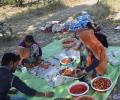
'To bring about a paradigm shift in farmers's income, we need to change our approach to agriculture, and transit from the narrow prism of cultivation to a full-fledged enterprise, by building all associated supply chain linkages.' 'This alone will make the farmer an entrepreneur in his own right.'

Notably, after coming to power in November 2019, the then MVA government scrapped certain policy decisions of its predecessor BJP-Shiv Sena government led by Fadnavis.

Agriculture and processed food exports dropped to a five-year low of $24 billion in 2015-16.

"There is no hike in vegetable prices. It's only the off-season fruits and vegetables such as green vegetables and early crops like lady finger and pumpkin whose prices are on the higher side," the study prepared by Delhi Agricultural Produce Marketing Board said. The report which was submitted to Chief Minister Sheila Dikshit two days ago has suggested vigilance on the retail market, saying the retailers were selling vegetables and fruits at higher prices.

The 'sudden volatility' in Adani stocks is entirely due to a series of events that was extreme and unique, and played out in too short a period. Investors and regulators pretended that it wasn't so. But then, along came Hindenburg, which forced some eyes to open, points out Debashis Basu.

Believe it or not, the regulator is even stretching its arm to identify stressed borrowers and gauge the 'distance to default' as a measure of a particular bank's fragility, reveals Tamal Bandyopadhyay.

The government, under the Finance Act, 2020, had allowed tax exemption for SWFs and pension funds in the case of incomes from investment in 34 key infrastructure sectors, including hotels, cold chains, educational institutions, hospitals, and gas pipelines.

Indian companies are planning to increase investments in the new year to expand capacity, acquire companies, and go on a hiring spree, a survey of top executives showed. They, however, cited rising costs, weak consumer demand, and increasing interest rates as major concerns for 2023 which may impact their plans.

Where do the four members of the Supreme Court appointed panel to interface with farmers stand on the Modi government's farm laws?

Investors booked profits at higher levels with oil shares leading the decline
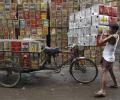
Major edible oil companies, including Adani Wilmar and Ruchi Soya, have reduced the maximum retail price (MRP) of their products by 10-15 per cent to provide relief to consumers, industry body SEA said on Monday. The prices have been reduced by Adani Wilmar (on Fortune brands), Ruchi Soya (Mahakosh, Sunrich, Ruchi Gold and Nutrella brands), Emami (Healthy & Tasty brands), Bunge (Dalda, Gagan, Chambal brands) and Gemini (Freedom sunflower oil brands), it said. OFCO (Nutrilive brands), Frigorifico Allana (Sunny brands), Gokul Agro (Vitalife, Mahek and Zaika brands) and others have also reduced prices, it added.

Delhi Chief Minister Arvind Kejriwal announced that primary schools will be closed from Saturday in view of spike in pollution levels in the national capital.

>The farmers will go home but the country will not get the agricultural reform it badly needs -- if nothing else, then to prevent a bigger water crisis than already exists, argues T N Ninan.

Private equity (PE) is set to play a bigger role in banks. Of 21 recommendations accepted by the Reserve Bank of India (RBI) out of 31 made by its Internal Working Group (IWG), its stance on non-promoter holdings in private banks is seen with excitement, though it doesn't refer to PEs explicitly. On non-promoter holdings in these banks, the RBI said this will be capped at 10 per cent of the paid-up voting equity share capital in the case "of natural persons and non-financial institutions and entities"; and "at 15 per cent for all categories of financial institutions, entities, supranational institutions, public sector undertaking, or the government." While this is a modification of the IWG's stance for the non-promoter holding in banks at up to 15 per cent, it does open up a huge window for PEs, all the same. This is because, while the RBI has remained silent on the eligibility of industrial houses for bank licences, fresh high-quality capital in large amounts can only come from PEs.

IT exporters were the top gainers amid a weak rupee along with select index heavyweights.
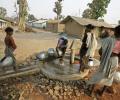
In May, Satpal Singh, who runs a dairy business with three buffaloes in Jewar, near Noida, was worried about the steep spike in input costs. Singh said dry fodder rates, which cost Rs 1,500-2000 per tractor trolley last year, were quoting at Rs 4,500-5,000. The price of other cattle feed ingredients (that include mustard meal and similar mixes) had also gone up from Rs 2,000 per quintal to Rs 3,100-3,200 per quintal.

Renowned women's rights activist and founder of the Self Employed Women's Association (SEWA) Ela Bhatt passed away in Ahmedabad on Wednesday due to age-related ailments, her associates said.

In yet another setback to it, the National Spot Exchange Ltd on Monday saw non-executive chairman Shankarlal Guru and another director quit, blaming 'bad people' in the management team for the crisis at NSEL.

Prices have continued to move up in Delhi's markets, wholesale and retail, on supply worries and spoilage due to record cold weather.

It is largely due to his vision and efforts that we have almost quadrupled our per capita milk availability in the last 40 years, points out Shailesh Dobhal.

Investors accumulated quality stocks at valuable and attractive levels.

The annual earnings of a non-executive chairman of a PSB is capped at Rs 10 lakh, inclusive of fees for attending board meetings. This is way below the compensation of the chairman of any private bank, reveals Tamal Bandyopadhyay.

In yet another move to close the regulatory gap between banks and shadow banks, the Reserve Bank of India (RBI) has mandated exposure limits to the non-banking finance companies, in line with commercial banks. In the large exposure framework released on Tuesday, the regulator capped aggregrate exposure of NBFCs which are in the upper layer toward one entity at 20 per cent of capital base. The limit can only be extended by another 5% with board's approval. For a particular borrower group, the cap is at 25 per cent, with additional 10 per cent if exposure is towards infrastructure.
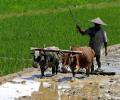
States need to create alternative marketing structures for farm produce since middlemen also provide vital services that are otherwise unavailable to the farmer.
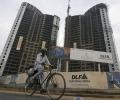
In mid-2020, when Kushal Pal Singh, the undisputed king of India's vast real estate market, relinquished the top post at the country's largest realtor, he left behind an empire that is best compared to the Greek myth of the Phoenix. Once the leader of Delhi's organised real estate market, DLF's steep decline in the 1970s and its majestic rise since has often been cited as a business resurrection story. Now, a year after his departure from the helm of affairs, history seems to be repeating itself at the real estate major. In the 1970s, it was the government prohibitions that had forced DLF to venture into uncharted territory; some five decades later, the Delhi-headquartered firm has set its eyes on another growth trajectory that holds immense potential.

India's first home-grown mapping company MapMyIndia is looking to list in the public market by raising around Rs 1,200 crore at a Rs 6,000-crore valuation. Sources said the company is ready with its draft red herring prospectus documents and is likely to file as early as next week. While the money will be used for business expansion, it will also give MapMyIndia's early investors, including Qualcomm, PhonePe, and Japanese mapmaker Zenrin Co., a chance to exit. The Verma family, which founded the company, will continue to remain promoters.

The weekend lockdown will start from 8 pm on Fridays and last till 7 am on Mondays. Besides, prohibitory orders will be in force during daytime on weekdays, the Chief Minister's Office (CMO) said in a statement.

Value addition is one of the chief requirements for coconut to become a commercially lucrative crop. Surinder Sud reports.

The Modi government's defeat on farm laws underlines the perils of governing an entire continent-sized, diverse and federal nation like the chief minister of a state, observes Shekhar Gupta.
With the commodities market growing in leaps and bounds, the prospects of agriculture students are very bright.

The Nafed has outstanding dues of Rs 224.26 crore (Rs 2.24 billion) as of February 15.

'The issue is not whether the farm laws are beneficial for the farmers or not.' 'The farmers have taken a stand that they do not want these laws.' 'Why do you want to thrust these laws down their throat?'

From farmers to cement, steel, logistics, transportation and automobiles, the back-end is struggling to get going due to the liquidity crisis.

Trump had said a comprehensive trade agreement with India would take much longer to finalise than earlier expected.
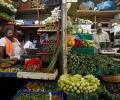
Supply rises as farmers harvest crops amid fear of spoilage on expectations of early showers

The global COVID-19 situation, rollout of vaccines, geopolitical trends, Union Budget and economic recovery would be the major factors driving investor sentiments in 2021 after a tumultuous year which saw both 'the worst of times and the best of times' for the stock market, said analysts. What a year 2020 turned out to be! From witnessing gigantic losses to record-shattering gains, investors went on a roller-coaster ride amid the coronavirus pandemic and massive stimulus measures. Markets closed 2020 with remarkable gains of around 16 per cent, but will the winning ways continue in 2021 as well?

Countering the opposition claim that farmers across the country are agitated over the three new laws, he said that those in just one state are being misinformed and instigated.
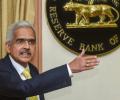
Expressing his satisfaction over the government's move to slash fiscal deficit target, Das said it will help improve investment by the private sector as crowding out impact will be less.
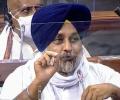
The SAD has been requesting the Centre not to introduce the three agriculture-related bills for the approval of Parliament until all reservations expressed by farmers' organisations, farmers and farm labourers are addressed, Badal said.
 © 2026 Rediff.com - Advertise with us - Disclaimer - Privacy Policy - Sitemap - Feedback - About us - Terms of use - Grievances